

RISINGSTARLCD believes that LG Display (LGD) has driven the increase in OLED (WOLED, QD-OLED) TV panel shipments through the size diversification strategy. In the fourth quarter of this year, Samsung Display also began mass production of QD-OLED TV panels. Upstream panel resources More abundant, downstream brand manufacturers will increase, and OLED TV panel shipments in 2023 are expected to exceed 10 million for the first time.
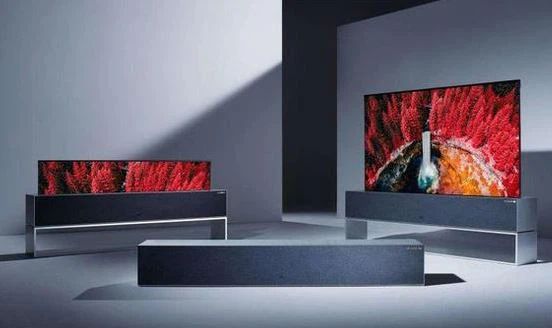
In recent years, as Chinese panel makers dominate the LCD panel industry, South Korean panel makers LG Display and Samsung Display have accelerated their strategic shifts to OLED. LG Display has continued to increase its OLED panel production capacity, and Samsung Display is also accelerating the mass production of QD-OLED panels. Recently, Samsung Display QD-OLED has passed the testing and certification of Sony and other manufacturers, and will produce QD-OLED panels on the 8.5th generation production line Q1 in Asan, Chungnam on November 30, with a monthly production capacity of 30K.
This is not the first time Samsung Display has produced OLED TV panels. As early as 2013, Samsung Electronics released a curved TV equipped with Samsung Display`s 55-inch OLED panel, but Samsung Display chose the wrong technology route for large-size OLED panels and used LTPS TFT OLED process to produce large-size OLEDs, but LTPS TFT backplanes and FMM Not suitable for the production of large-size OLEDs, so Samsung Display had to stop producing large-size OLEDs at that time.
Today, Samsung is making a comeback with QD-OLED. QD-OLED uses blue OLED as the bottom light, then excites red and green quantum dot films to form red light and green light, and finally forms RGB together with blue OLED. Among them, the blue OLED adopts the evaporation process, and the green and red quantum dot films adopt the printing process. Compared with RGB OLED, the QD-OLED solution only requires blue OLED evaporation, which reduces the difficulty of preparation. Compared with LG Display WRGB OLED (WOLED), Samsung Display QD-OLED has higher luminous efficiency.
After Samsung Display mass-produces QD-OLED, it will break LG Display's monopoly in the field of OLED TV panels and bring more OLED TV panel resources to downstream manufacturers. According to Luotu Technology`s forecast, Samsung`s Display QD-OLED TV panel shipments will be 1.4 million in 2022.
Samsung Display will cut into the 55-inch and 65-inch OLED TV panel market. At present, 55 inches and 65 inches are the mainstream sizes of the TV market, occupying a larger market share in the TV market, which is convenient for Samsung Display to open the market. As the market leader in OLED TV panels, LGD has launched 48-inch, 55-inch, 65-inch, 77-inch, 83-inch, and 88-inch OLED TV panels, but the largest shipments are still 55-inch and 65-inch sizes. Samsung Display joins the 55-inch and 65-inch OLED panel market, which will further popularize OLED TVs of this size segment.
With the mass production of QD-OLED by Samsung Display, members of the QLED TV camp may launch OLED TVs. The main members of the QLED TV camp are Samsung Electronics and TCL Electronics. They currently promote Quantum Dot Mini LED-backlit LCD TVs. If Samsung Electronics continues to promote QLED TVs, it will support the LCD panel industry and will increase its dependence on panel manufacturers in mainland China.
In order to reduce its dependence on Chinese LCD panel manufacturers and to compete with them, Samsung Display will focus on QD-OLED in the future. Samsung Electronics` high-end TVs will use its own QD-OLED panels and even purchase LGD OLEDs. TCL Electronics may also follow in the footsteps of Samsung Electronics and launch OLED TVs. By then, all major TV manufacturers in the world will embrace the OLED TV market.
At present, LG Electronics and Sony are the dominant players in the global OLED TV market, but with the addition of manufacturers such as Samsung Electronics and TCL Electronics, the global OLED TV market duopoly may be broken. At the same time, manufacturers such as LG Electronics, Sony, and Samsung Electronics will accelerate the development of the OLED TV market and expand the export of OLED TV panels. Omdia predicts that OLED TV panel shipments will reach 8 million in 2021, and will exceed 10 million in 2023.